Democrats, liberals, and left-wing proponents have conspicuously embraced the notion that the United States of America was founded upon principles entwined with racism and white supremacy. This stance has endured over the course of decades; it is by no means a clandestine perspective.
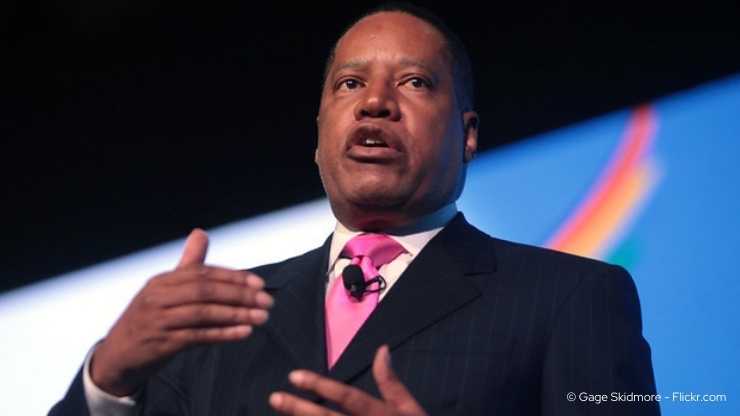
As part of their discourse, they consistently assert that the nation operates under a systemic racism paradigm and attribute any adverse sociopolitical conditions involving individuals of non-white ethnicity to this construct. This recurring pattern of rhetoric draws censure from Republican voters on a routine basis. However, it is noteworthy that only one Republican candidate for the presidency, Larry Elder, displayed the audacity to challenge their agenda-driven extremities concerning matters of race.
Within the context of the 21st century, the concept of systemic racism is positioned by left-wing extremists as propaganda. Democrats, liberals, and other proponents of left-wing ideologies employ this narrative to manipulate public opinion, sway voters, and amass political influence. This perspective is one that Larry Elder has been expounding upon for a considerable duration. Indeed, propagating this message serves as a central tenet of his presidential campaign. It is for this reason that his inclusion on the debate stage in Milwaukee on August 23 is warranted. Irrespective of individual candidate preferences, the message Elder conveys stands as one of paramount importance for the entire nation.
The rationale behind this assertion is grounded in Elder’s recognition that if the dissemination of misinformation surrounding systemic racism is allowed to persist, its deleterious impact will reverberate across generations. This political fallacy, wielded by the Left, will continue to be a weapon unless it is fully dismantled. Amidst the backdrop of internal bickering amongst fellow Republican contenders, often revolving around transient issues designed to agitate and divert, Elder’s comprehension of the magnitude of this ideological peril and the peril it poses to the nation’s durability is discernible.
During a recent appearance on the widely listened-to radio show “The Breakfast Club,” hosted by Charlamagne Tha God, Larry Elder forthrightly unveiled the incongruities and hypocrisies prevalent within left-wing discourse concerning systemic racism. He specifically highlighted instances of selective outrage and dual standards, exemplified by Charlamagne’s muted response when Joe Biden, in a 2020 appearance on the show, suggested that an individual’s authentic Black identity was contingent upon their support for him.
Elder retorted, “When Joe Biden belittled you by asserting, ‘You’re not truly Black if you’re uncertain about voting for me or Donald Trump,’ one would think that such an incident would have constituted a wake-up call on your part.” He astutely observed, “How dare this individual enter and demean you, a Black man, by stipulating that your thought processes must adhere to a specific mold.” Elder continued to articulate his amazement at the absence of indignation from Charlamagne in response to such statements.
In addition, Elder effectively elucidated the fallacious narratives underpinning systemic racism while also underscoring the underreported issue of fatherlessness in the nation. This discourse transpired within a forum where neither the hosts nor the audience shared his viewpoints, amplifying its significance. Elder’s rationale was articulated in his statement made on the “Megyn Kelly Show” before formally announcing his candidacy: “I endeavor to bring to the fore two pivotal aspects—primarily, the indispensable role of fathers within households, a topic deserving of greater dialogue; secondarily, I posit that I am well-situated to debunk the prevailing notion of systemic racism, drawing upon my personal experience growing up in a disadvantaged environment.”
The Democrats’ persistent drive to depict the country as inherently racist is conspicuous. They seek to imprint upon every school-going child and voter the notion that the nation’s fabric is irrevocably marred by white supremacy, perpetuating the suppression of non-white individuals. This is a predicament that necessitates concerted attention rather than being relegated to passive neglect—a modus operandi that has characterized the approach of most Republicans for generations. Larry Elder’s cognizance of this predicament serves as one of the pivotal factors setting him apart from other candidates.
Elder articulated, “What transpired? A Democrat by the name of Lyndon Johnson initiated what he labeled the war on poverty. In its wake, we have incentivized women to enter into symbiotic relationships with governmental entities, while concurrently incentivizing men to relinquish their financial and moral obligations.” He astutely remarked on the silence surrounding this issue from the opposing side due to their complicity in its inception, while simultaneously noting the reticence from his own side, borne from a fear of being branded as systemically racist or, in his case, a “black face of white supremacy,” as labeled by the Los Angeles Times.
For Republicans who find themselves wearied by the persistent narrative of an inherently racist U.S. populace, a unique opportunity presents itself this week: the ability to propel Larry Elder onto the debate stage. Agreement with his viewpoints is not obligatory, nor is endorsement through voting. However, Elder’s campaign is anchored by a singular objective distinct from other contenders—to debunk the fallacy of systemic racism. Granting him the platform to express his stance is an exercise in affording his voice a chance to resonate.
Elder himself articulated, “Even if I do not emerge as the chosen candidate, and even if I am not the nominee, facilitating discussions within the party, amongst Democrats, and within the media on these pertinent matters would signify my accomplishment for the party and, more importantly, for the nation.”